Cockpit Theatre, London, 1966; National Theatre of Craiova, Romania, 2004.
Performance
Plays
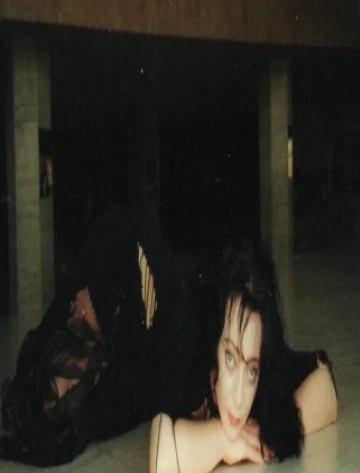
The Well-Intentioned Builder
A woman calls a builder to fix a damp patch in her childhood nursery. He fixes it and then, finding deeper rot beneath the surface, proceeds to dismantle the entire house. First staged at the Cockpit Theatre in 1966, the play was revived nearly four decades later at the National Theatre of Craiova, Romania, where it was received as if it had been written yesterday.

One More Bull
Cockpit Theatre, London, 1966
A sharp, comic piece staged at the Cockpit Theatre in 1966. One More Bull deploys comedy as its primary instrument, with an eye for the absurdities of institutional behavior that would run through his writing for decades.

The Man of the Future is Dead
Edinburgh Fringe Festival, 2006; Bulandra Theatre, Bucharest, 2007
A meditation on utopia, disappointment, and the gap between the futures we imagine and the ones we actually inhabit. Staged at the Edinburgh Fringe in 2006 and subsequently at the Bulandra Theatre in Bucharest, one of Romania’s great theatrical institutions, the play reflects Elsom’s long engagement with Eastern European culture and his understanding of what the collapse of ideological certainty feels like from the inside.

Old Boy
Tristan Bates Theatre, London, 2009
Produced by Anthony Field Associates at the Tristan Bates Theatre in London’s West End, Old Boy is a two-hander about memory, friendship, and the unexpected revisitations of the past. Compact and precisely written, it demonstrates John’s gift for finding large themes in small encounters.

Second Time Round
International Festival of Musical Theatre, Bucharest, 2007; London, 2011
A musical with music by composer Wayne Warlow. A divorced London lawyer arranges what she intends to be a strictly professional relationship with a Romanian handyman on a work permit. The arrangement, inevitably, becomes something else. Set against the backdrop of European expansion in the early 2000s, the show moves between comedy and heartbreak, using its songs to give voice to what neither character can quite bring themselves to say.
Libretti

Peacemaker
ADC Theatre, Cambridge – 1956
Written and directed by John Elsom during his time at Cambridge, Peacemaker was performed at the ADC Theatre, one of Britain’s oldest university theatre companies and reviewed in The Times. An early indication of the qualities that would mark his later work: the integration of words, music, and movement as equally weighted dramatic elements, and a refusal to treat theatrical form as merely incidental to content.

Maui
Libretto for the opera by Barry Anderson, 1958
Written for the New Zealand composer Barry Anderson, Maui draws on Polynesian mythology to explore themes of creativity, transgression, and the relationship between human ambition and natural order. The eponymous figure of Maui, the trickster demigod of Pacific legend who fished up islands from the ocean floor and attempted to win immortality for humanity provides Elsom with a rich dramatic subject: the over-reacher whose gifts and daring cannot ultimately save him.
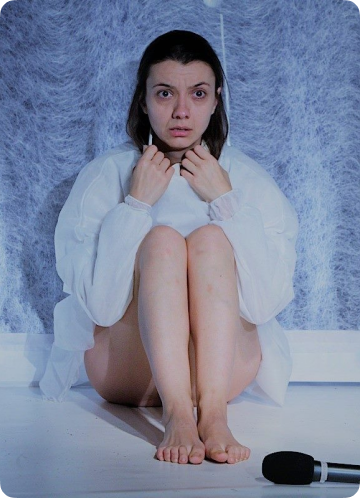
The Turning World
Unteatru, Bucharest – 2011
Staged at Unteatru in Bucharest in 2011, The Turning World is John’s most recent libretto and reflects his long creative relationship with Romanian theatre. The work engages with the experience of historical transformation, the sense of living through a turning point whose significance can only be understood in retrospect and brings together the political and the personal in a form that requires both word and music to carry its full weight.
Adaptations

Malone Dies
Edinburgh International Festival
(and on tour) – 1984
Adapted and directed by Elsom from Samuel Beckett’s novel for the comic actor Max Wall, Malone Dies was staged at the Edinburgh International Festival in 1984 and subsequently toured. The challenge of bringing Beckett’s monologue, the second volume of the great trilogy that ends with The Unnamable to the stage was met with a production that used Wall’s extraordinary physical and comic gifts to find the dark comedy buried in Beckett’s apparently desolate prose. The result was acclaimed as one of the outstanding achievements of that year’s Festival.

Hedda Gabler
Edinburgh Fringe Festival – Aug 2006 – Bulandra Theatre – 2007
John’s adaptation of Ibsen’s masterpiece was staged at the Edinburgh Fringe in 2006 and at the Bulandra Theatre, one of Eastern Europe’s most celebrated companies in Bucharest the following year. Rather than domesticating Ibsen into period naturalism, the adaptation presses on the play’s contemporary resonances: the claustrophobia of social expectation, the destructive force of thwarted intelligence, the violence that follows when a person is denied the life they were capable of living.